Section 1: Outlook on Life from Pre-Qin to Han Dynasty
Sort out the historical background of the formation of the Pre-Qin scholars, the Yin-Yang School, and the Huangdi Neijing, and understand how the ancients explained life, disease, and health preservation based on the rhythms of heaven and earth. The course also marks the AD chronology of important historical stages to help foreign learners establish a clear time coordinate.
Section 2 Medical exchanges from the Wei and Jin Dynasties to the Sui and Tang Dynasties
Observe the interaction between metaphysics, Taoist health preservation, medical theory and magic traditions from the Wei and Jin Dynasties to the Sui and Tang Dynasties, and understand how the concepts of Qi, form, spirit and cultivation entered health practice.
Section 3: Systematization of Neo-Confucianism and Medical Yi in the Song and Ming Dynasties
Explain the development of Heluo, Tai Chi, and Li Qi during the Song and Ming dynasties, and how these ideas promoted the systematic expression of the five elements, luck, and constitution theories.
Section 4 The value of traditional knowledge in modern society
Discuss the significance of horoscopes and traditional Chinese medicine in contemporary self-observation, life management, and cross-cultural communication, while explaining the differences between modern medical evidence and traditional interpretation systems.
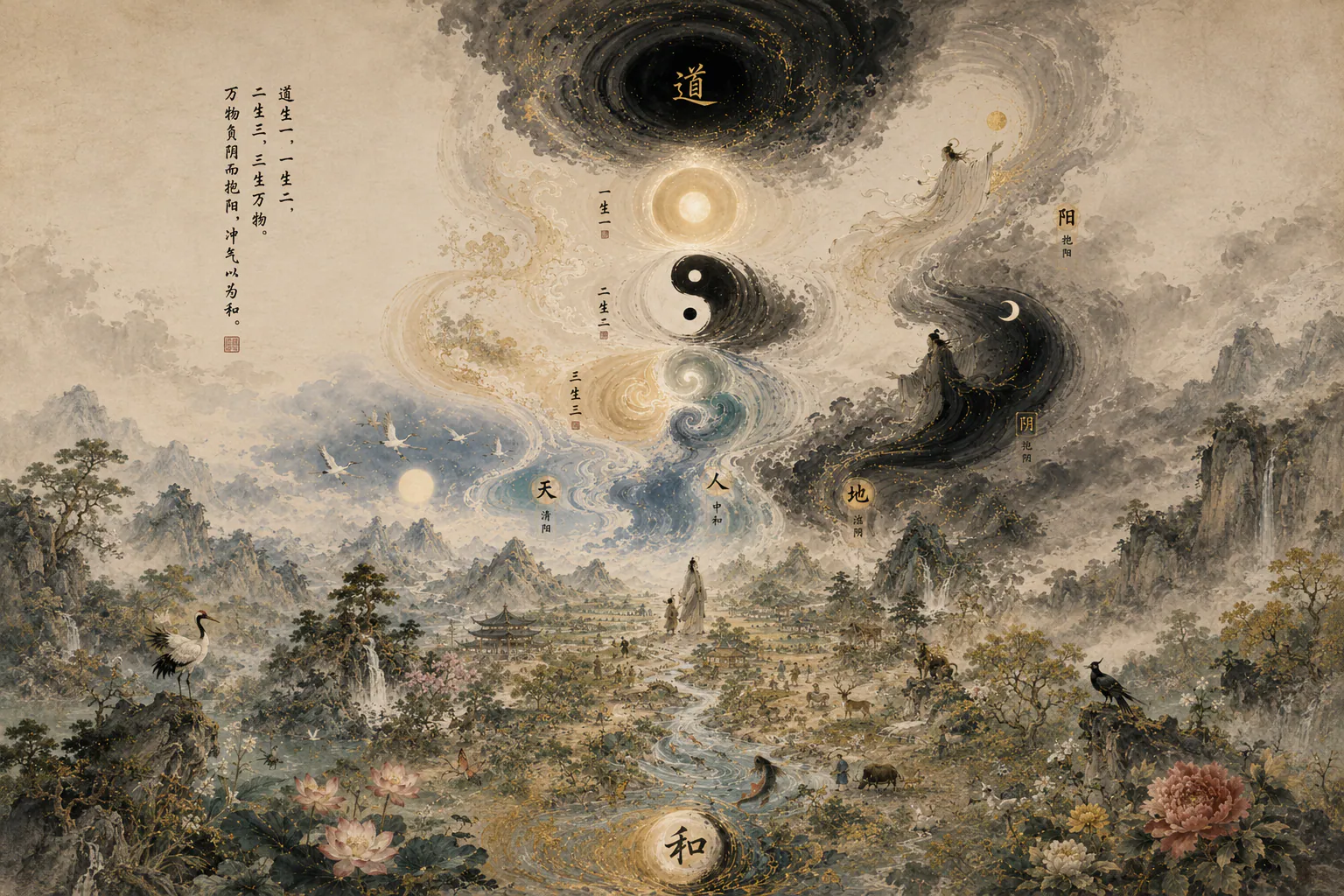
BaZi & TCM
Read the physical code from the moment of birth and understand the rhythm of life with yin and yang and five elements
 01 / 04
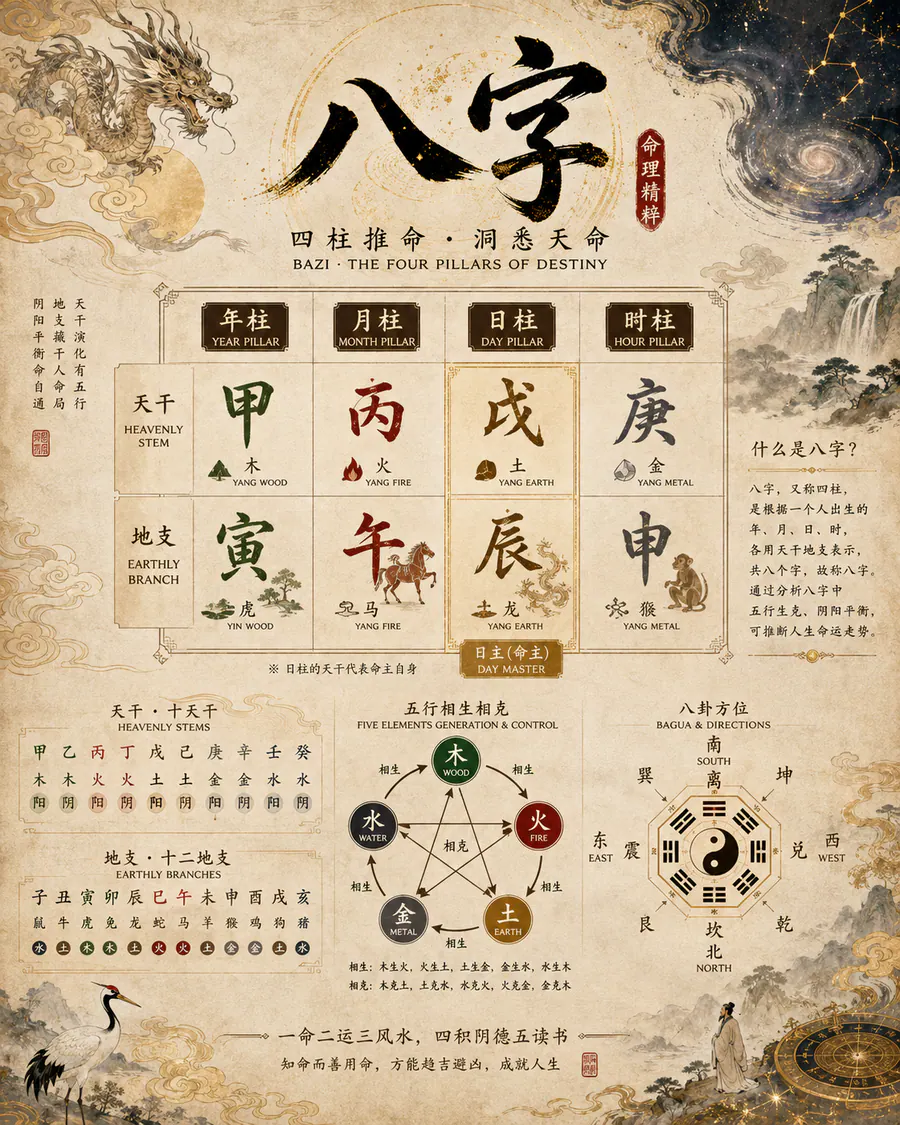
BaZi
BaZi & TCM
The horoscope records the weather and five elements that a person inherits at birth. Traditional Chinese medicine observes how qi, blood, yin and yang, internal organs and the four seasons maintain the balance of life.
The course combines two sets of ancient knowledge to enable students to understand innate physical tendencies, staged health topics and daily maintenance directions.
Enrollment is arranged directly by email or WhatsApp.
Why are some people naturally afraid of cold and tired easily, while others often feel dry mouth, hot and restless? Why do different people have different feelings about the same diet and routine? Traditional Chinese culture believes that everyone inherits a unique combination of yin and yang and the five elements at birth. This combination constitutes the innate quality of life and also affects the body's response to seasons, environment, stress and lifestyle.
Ba Zi is also called Four Pillars Numerology, often translated as Four Pillars of Destiny or Ba Zi in English. It uses the heavenly stems and earthly branches formed by the year, month, day, and time of birth to observe a person's five-element endowment and time rhythm. Traditional Chinese Medicine (TCM) understands the overall balance of the human body through concepts such as qi, yin and yang, five elements, viscera, and meridians. BaZi and Chinese medicine share the same yin-yang and five-element language, so they can be cross-referenced.
This course starts from the common ideological foundation of Yi Xue and traditional Chinese medicine, and leads students to learn the health observation methods of heavenly stems and earthly branches, five elements, ten gods, corresponding organs, nine constitutions, and the Great Fortune. Students will also learn how to formulate non-drug lifestyle plans such as diet, work and rest, qigong, breathing and meditation based on physical tendencies and changes in the four seasons. The course emphasizes traditional cultural learning and self-observation, and does not replace modern medical diagnosis with horoscopes.
- Understand the innate constitution
Starting from the relationship between cold, heat, dryness, dampness and the strength of the five elements, observe that you are prone to physical tendencies such as qi deficiency, yang deficiency, yin deficiency, phlegm-dampness, dampness and heat, blood stasis, qi stagnation or special endowments.
- Identify health vulnerabilities
Combined with the traditional correspondence between the five elements and the five internal organs, we can determine the life themes that require long-term attention in the liver, heart, spleen, lungs, kidneys and other systems, and distinguish innate tendencies from acquired triggers.
- Observe annual health rhythms
Combine the original situation, Universiade, passing years and seasonal changes to identify the stages in certain years or months that require more attention to sleep, emotion, diet, work and rest, and physical examination.
- Develop a daily maintenance plan
Choose appropriate dietary directions, work and rest rhythms, exercise intensity, breathing exercises, Qigong and meditation methods according to your physique and season, and establish a life plan that can be implemented in the long term.
- Analyze yourself and your family’s horoscope
Use unified steps to complete the horoscope health observation, form a physical portrait, key organs, staged themes and life suggestions, and be able to clearly explain the basis for judgment.
- Carry out basic cultural consultation
On the premise of clear medical boundaries, provide others with lifestyle references based on traditional numerology and traditional Chinese medicine health culture, and recommend timely medical treatment when symptoms or high-risk signals appear.
- Foreign learners and traditional culture enthusiasts who hope to systematically understand the Bazi, Yin Yang and Five Elements and the theory of TCM constitution.
- Students who have already studied horoscopes and want to increase their abilities in health observation, physical analysis and fortune application.
- People who pay attention to diet, sleep, mood, Qigong and meditation, and hope to establish a personalized life plan.
- Practitioners who are engaged in cultural communication, health education or consulting work and want to master the boundaries of normative expression and risk.
This course belongs to traditional Chinese numerology and traditional Chinese medicine health culture education, and is used for self-observation, lifestyle planning and cross-cultural understanding. Horoscopes cannot diagnose diseases, nor can they predict that someone will definitely suffer from a certain disease. Judgment of physical constitution, organs, and fortune in the course cannot be used as a substitute for medical consultation, examination, imaging, prescription, first aid, or psychological treatment. When persistent symptoms, acute discomfort, or high-risk signals occur, professional evaluation from a qualified medical institution should be sought promptly.
Course Curriculum
BaZi & TCM
Section 1: The image of the five elements and internal organs of the Ten Heavenly Stems
Systematically study the attributes of yin and yang and the five elements of A, B, C, D, Wu, Ji, Geng, Xin, Rengui, and understand their traditional imagery in body, temperament, and functional activities.
Section 2 Twelve Earthly Branches, Tibetan Stems and Seasonal Qi
Learn the directions, seasons, Tibetan dryness, cold, warm, dry and damp characteristics of Zichou Yin Mao Chen Si Wu Wei Shen You Xu Hai, and understand why the moon order is an important starting point for judging physical fitness.
Section 3 The Four Pillars and the Levels of the Human Body
Introduce the composition of the four pillars of year, month, day and hour, as well as the information about innateness, family, adulthood and old age carried by different pillar positions in traditional numerology.
Section 4: Ten Gods and Physical and Mental Activities
Starting from the relationship between calamity, food injury, wealth, official killing and seal star, we observe the physical and mental themes such as stress, expression, consumption, nourishment, self-discipline and recovery.
Section 1: Bio-restraint and dynamic balance
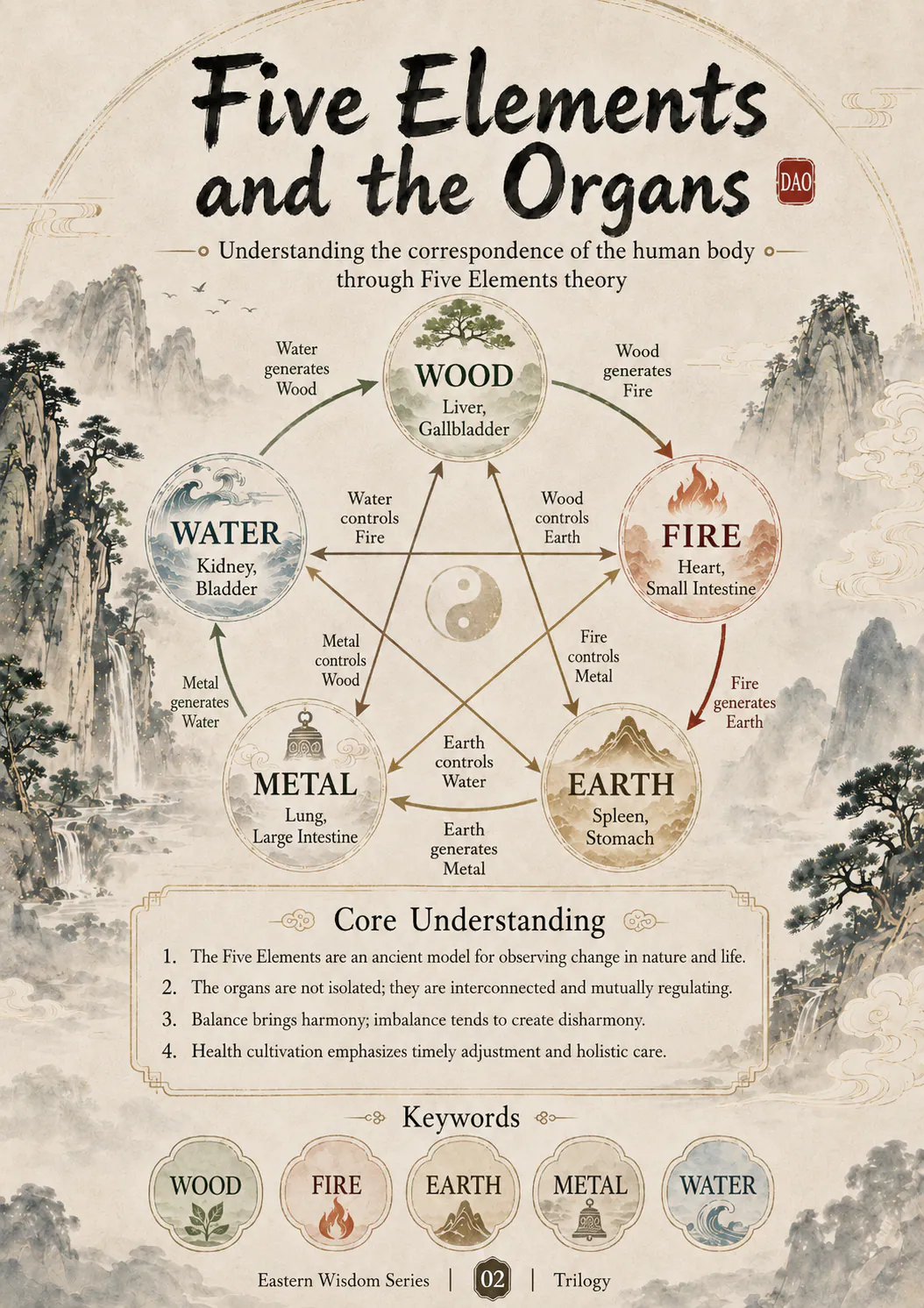
Explain the relationship between wood, fire, earth, metal, and water to generate, restrain, control, and take advantage of each other, and explain that the focus of the judgment of the five elements lies in the overall circulation, rather than simply pursuing the more of a certain element, the better.
What You Can DoAnalyze whether the five elements in the horoscope are dry, overactive or blocked in circulation.
Section 2 Cold, Warmth, Dryness and Dampness and Climate Adjustment
Learn the ideas of climate adjustment, observe the basic needs of people born in different seasons in terms of cold, heat, dryness and humidity, and make corrections based on the actual climate and living environment.
What You Can DoPropose diet, work and environment directions that are more in line with personal climate characteristics.
Section 3: The imbalance of the five elements and the relationship between the internal organs
Combined with the theory of the five internal organs of traditional Chinese medicine, we discuss the traditional health themes that may correspond to when a certain five elements are too strong, too weak, or restricted, and emphasize that numerology signals only constitute observation clues.
What You Can DoForming a complete path from fate signals to life observation to medical verification.
Section 4 Emotions, Stress and Physical Reactions
Analyze the traditional relationship between the five elements of emotions and the five internal organs, and observe the sources of stress and emotional response patterns based on the ten gods and luck of the year.
What You Can DoEstablish priorities for emotional regulation, rest arrangements, and stress management.
Section 1: Peaceful quality, Qi-deficiency quality and Yang-deficiency quality
Learn the traditional manifestations, formation factors and life concerns of the three types of constitutions, and analyze the possible clues of weak five elements, cold and dampness and energy consumption in destiny.
What You Can DoPreliminarily distinguish the tendencies of peace, qi deficiency and yang deficiency, and provide suggestions for daily life and exercise.
Section 2: Yin deficiency, phlegm-dampness and damp-heat
Understand the traditional meanings of insufficient body fluids, stagnant accumulation of phlegm and dampness, and the interweaving of dampness and heat, and observe the relationship between dryness and heat, earth-dampness, water and fire in the destiny and its real-life manifestations.
What You Can DoDetermine the direction of adjustments for dietary lightness, hydration, sleep, exercise, and ambient humidity.
Section 3: Blood Stasis, Qi Stagnation and Special Qualities
Learn the traditional characteristics of poor blood circulation, stagnation of Qi and innate sensitive constitution, and make comprehensive observations based on the five elements to overcome the war, the pressure of the ten gods and personal experience.
What You Can DoIdentify situations that require more emotional counseling, regular activity, or medical evaluation.
Section 4 Composite physique and dynamic changes
It shows that most people have more than two tendencies at the same time, and their physique will change with age, season, lifestyle and health status.
What You Can DoCreate a personal physical portrait to distinguish long-term background, current status and short-term fluctuations.
Section 1: The original bureau determines the theme of innate health
Starting from the moon order, the strength of the sun, the distribution of the five elements, the relationship between cold, warmth, dryness and dampness and life and restraint, we can extract the long-standing physical background and life weaknesses in the fate.
What You Can DoForm a basic report including physical tendencies, key five elements and life risk factors.
Section 2: Observing the changes in the Universiade in ten years
Learn how the Universiade changes the destiny and environment of the five elements, and understand the ten-year health theme based on life stages, work pressure, family responsibilities and the aging process.
What You Can DoDetermine the life resources and recovery capabilities that should be prioritized for protection at different stages of life.
Section 3: Judgment of the Superposition of Years and Seasons
Combine the fleeting stems and branches with the original situation, Universiade and seasons of the year to observe whether cold and heat, dryness and dampness, pressure and consumption are concentrated in certain years.
What You Can DoIdentify annual windows when increased physical exams, sleep, exercise, or mood management are needed.
Section 4: From risk warning to action plan
Establish expression standards for traditional numerology risk prompts, not using deterministic disease predictions, but transforming signals into verifiable and executable health management matters.
What You Can DoOutput an annual health watch list and identify when you should seek a physician evaluation.
Section 1 Wood and the liver and gallbladder system
Combined with the rising and releasing of wood and the imagery of muscles and eyes, the traditional combinations of strong wood, weak wood, war between metal and wood, and dampness and heat are analyzed. At the same time, practical factors such as emotional depression, prolonged sitting, staying up late, and drinking alcohol are observed.
What You Can DoProvide layered recommendations around routine, stretching, emotional expression, and medical examinations.
Section 2 Fire and Mind System
Explain the traditional connection between fire and the heart, small intestine, blood vessels, sleep and mental activities, and observe combinations such as excessive fire, insufficient fire, and lack of water and fire.
What You Can DoSet life priorities for sleep, arousal, work rhythm and cardiovascular risk management.
Section 3 Earth and Spleen and Stomach System
Analyze the traditional relationship between earth and digestion, absorption, muscles, thoughts, and phlegm-dampness, and combine horoscope clues such as excessive earth, earth deficiency, wood overcoming earth, and dampness.
What You Can DoAdjust eating habits, meal rhythm, exercise and stress eating habits.
Section 4 Metal and Lung Skin System
Explain the traditional relationship between metal and breathing, skin, large intestine, austerity and sorrow, and observe the relationship between metal dryness, metal weakness, fire overcoming metal and earth metal.
What You Can DoFocus on air quality, breathing exercises, skin care, bowel movements, and emotional boundaries.
Section 5 Water and Kidney Essence System
Analyze the traditional correspondences of water with the kidneys, bladder, bones, ears, energy reserves, and fears, and observe relationships between water being strong, water weak, earth over water, and water and fire.
What You Can DoDevelop a long-term plan around rest, warmth, endurance, recovery, and relevant medical testing.
Section 1 Five flavors, five colors and food attributes
It introduces the traditional food habits of sour, bitter, sweet, pungent, salty, cold, cool, warm, hot and equal, and explains that food nutrition needs to be combined with physical constitution, season, region and past diseases.
What You Can DoChoose your daily diet according to your physical condition, and avoid treating a single food as a treatment.
Section 2: Diet and Work and Rest in Four Seasons
The key points of life are explained respectively for stretching in spring, nourishing the heart in summer, moisturizing in autumn and collecting in winter, and make individual adjustments based on the climate of birth and the operation of the year.
What You Can DoCreate a year-round eating, sleeping and exercise rhythm chart.
Section 3 Breathing and Basic Qigong
Learn basic exercises that focus on breathing, standing, stretching and slow movements, and understand that the intensity of the exercises needs to be subject to personal physical and medical limitations.
What You Can DoEstablish a daily safety practice regimen of ten to twenty minutes.
Section 4: Meditation and Emotional Attunement
Observe emotions and body sensations using techniques such as breath awareness, body scanning, imagery and meditation, and use the Five Elements of Emotions for self-understanding.
What You Can DoChoose a meditation method that works for you and create a sustainable stress recovery habit.
Section 1: Standard process of horoscope health analysis
Establish a complete process from birth information verification, destiny climate, strength of the five elements, physical reference, changes in luck over time to life suggestions.
What You Can DoComplete the health and culture analysis of a horoscope according to a unified template.
Section 2: How to conduct a health interview
Learn to ask about sleep, diet, mood, exercise, work stress, past medical history, and medical visits, and respect privacy and informed boundaries.
What You Can DoInterviews are used to supplement the information that the horoscope cannot provide and avoid making judgments that are divorced from reality.
Section 3 Consulting Report and Risk Communication
Train how to express traditional judgments in terms of tendencies, possibilities, and observations, and avoid the use of threatening language, absolute predictions, and unproven promises of efficacy.
What You Can DoProduce clear, controlled, and actionable consulting reports.
Section 1: Personal horoscope and physical portrait
Students use their own horoscopes as examples to complete a comprehensive analysis of the five elements, climate, nine types of constitution, key organs and life patterns.
What You Can DoForm a personal life rhythm and physical portrait.
Section 2 Annual Healthy Rhythm Plan
Combined with the Universiade, passing years, seasons and real schedule, mark the stages of the year that require focus on rest, physical examination, exercise or diet adjustment.
What You Can DoCreate an actionable annual health management calendar.
Section 3: Design of non-drug nursing care plan
Comprehensive nutrition, work and rest, qigong, breathing, meditation and environmental adjustment, set short-term goals, implementation frequency and review standards for individuals.
What You Can DoComplete an eight to twelve week personal care plan.
Section 4: Comprehensive case defense
Students choose real cases from themselves, family members or authorized cases, explain the basis of judgment, medical boundaries, life suggestions and referral conditions, and accept comments from teachers.
What You Can DoIndependently complete a complete project from birth chart analysis to plan expression.
Your Teacher
Learn With Dr. Ming
Traditional Chinese Philosophy, BaZi & Mind-Body Practice
Mr. Yiming, Ph.D. in Management, studies the inheritance and contemporary transformation of traditional Chinese philosophical thought. His work connects Daoism, Legalism, modern management theory, BaZi, traditional Chinese medicine, and Zi Wei Dou Shu in a practical path toward clearer decisions and a more harmonious life.
Meet Dr. MingRead Before Your Next Lesson
Five Elements & Body Organs
A careful introduction to traditional correspondences between the Five Elements, seasonal change, and bodily systems.
Reading BaZi as a Language of Time
A structural overview of how stems, branches, elements, and cycles become a vocabulary for discussing time and pattern.
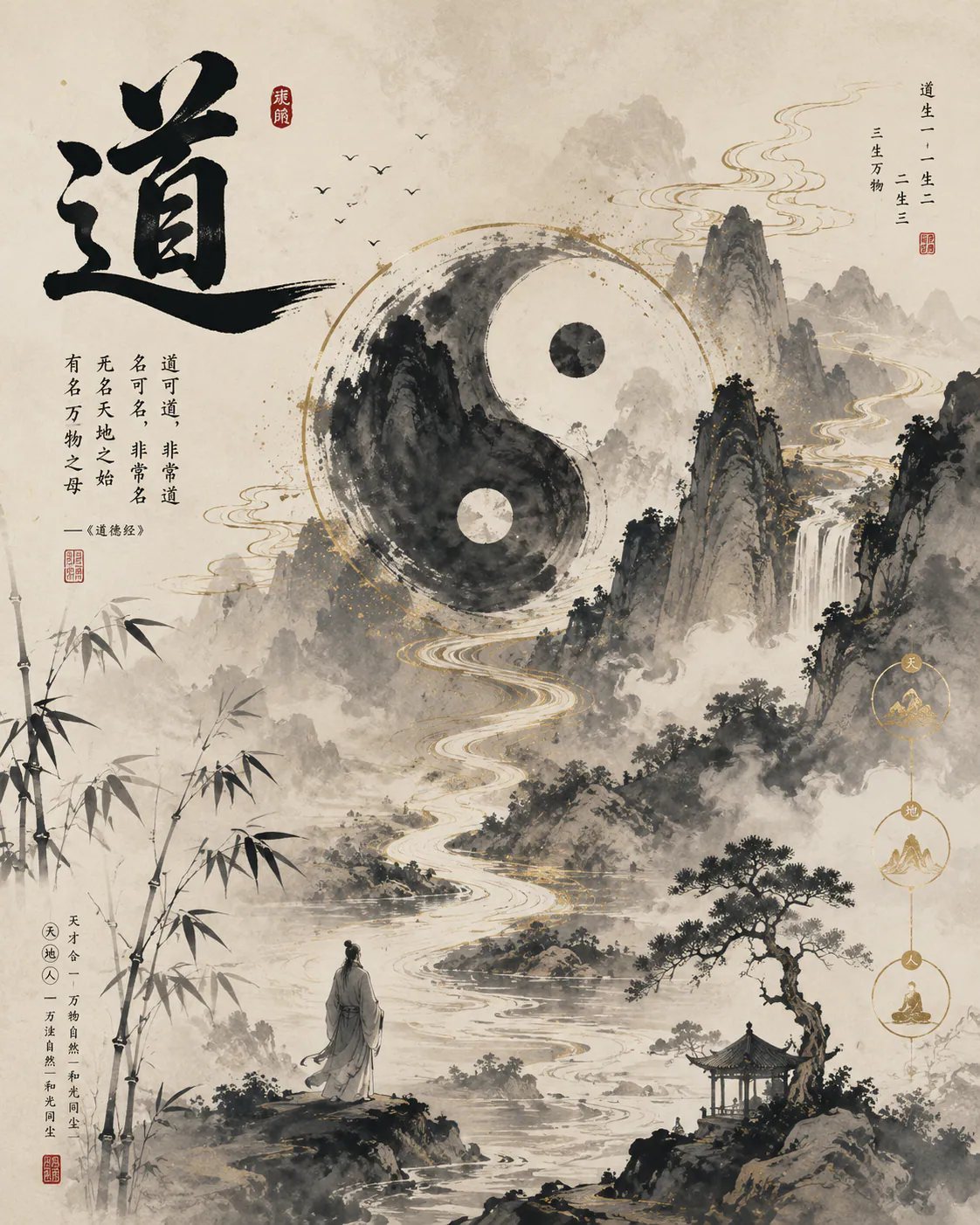
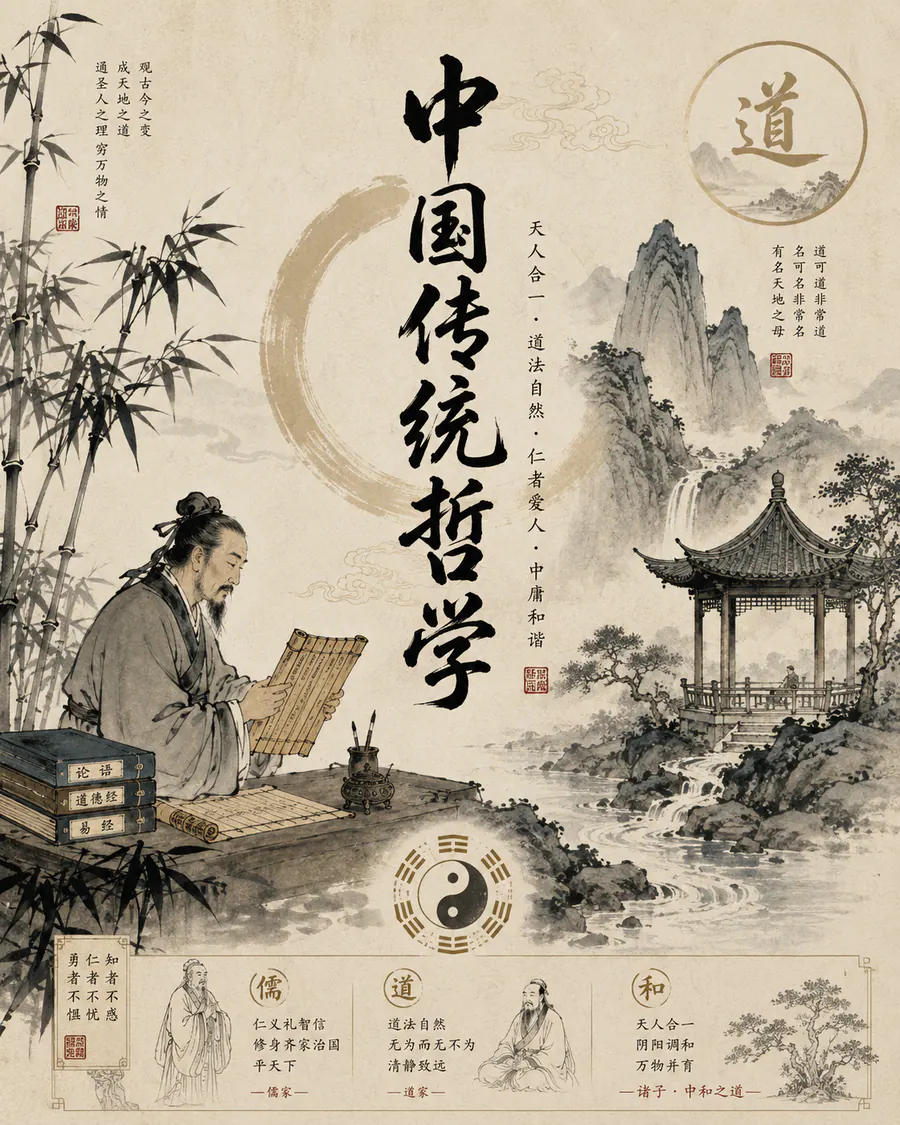
What Is Dao?
An introductory reflection on change, relationship, and the limits of the language used to describe the Dao.
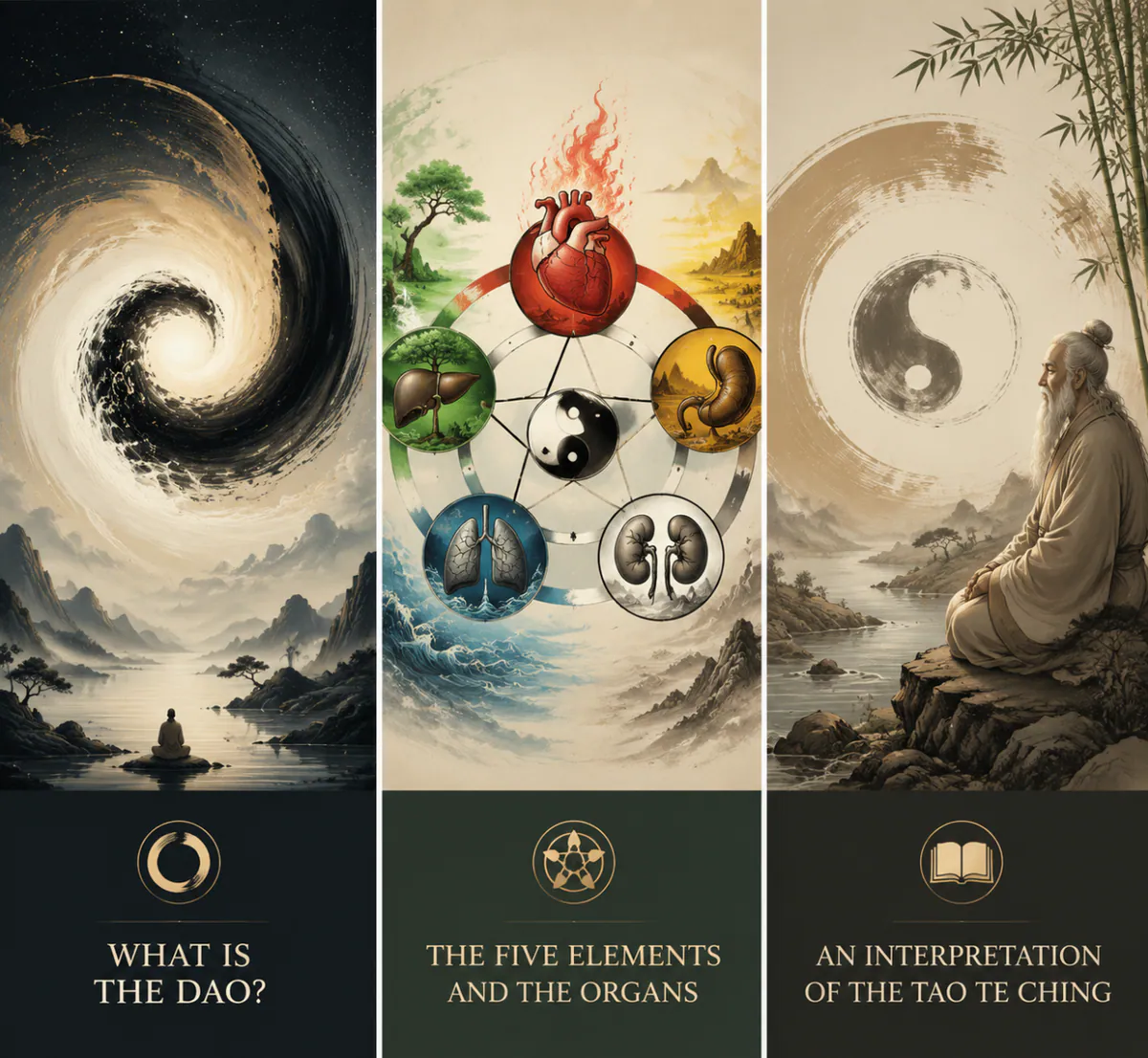
Decoding the Dao De Jing
How to approach compact classical language with patience, structure, and room for more than one reading.